Last updated: March 2026.

Photo: Unsplash
In 2016, Makoto Shinkai’s “Your Name” (Kimi no Na wa / 君の名は。) became the highest-grossing anime film of its time and introduced millions of international viewers to the concept of anime pilgrimage. Nearly a decade later, the stairs at Suga Shrine in Shinjuku’s Yotsuya neighborhood still draw fans from around the world — smartphones held up to match the exact angle of the film’s final, devastating scene.
But the film’s real-life locations extend far beyond that one famous staircase. Shinkai and his team reproduced every Tokyo location with obsessive accuracy — the handrails, the surrounding buildings, the precise angle of afternoon light. Visiting these locations in sequence creates a walking route that takes you through parts of Tokyo that most tourists never see, and that hits differently once you’ve watched the film.
This is seichi junrei (聖地巡礼) — “holy land pilgrimage.” The practice of visiting real places that inspired anime scenes. And “Your Name” remains one of the most rewarding anime to do it with.
- Table of Contents
- Location 1: Suga Shrine Stairs — The Final Scene
- Location 2: Shinjuku Station South Exit & Pedestrian Overpass
- Location 3: Shinanomachi Station Area
- Location 4: National Art Center, Tokyo (Roppongi)
- Location 5: Yotsuya Station & Surrounding Streets
- Suggested Walking Route: Half-Day “Your Name” Pilgrimage
- Beyond Tokyo: Hida & Takayama (The “Itomori” Region)
- Photography & Pilgrimage Etiquette
- More Anime Pilgrimages
- Related Guides
- More Pilgrimage Guides
Table of Contents
- Location 1: Suga Shrine Stairs (The Famous Scene)
- Location 2: Shinjuku South Exit & Overpass
- Location 3: Shinanomachi Station Area
- Location 4: National Art Center, Tokyo
- Location 5: Yotsuya Station & Surrounding Streets
- Suggested Walking Route (Half-Day)
- Beyond Tokyo: Hida/Takayama (The “Itomori” Region)
- Photography & Etiquette Tips
Location 1: Suga Shrine Stairs — The Final Scene

Photo: Unsplash
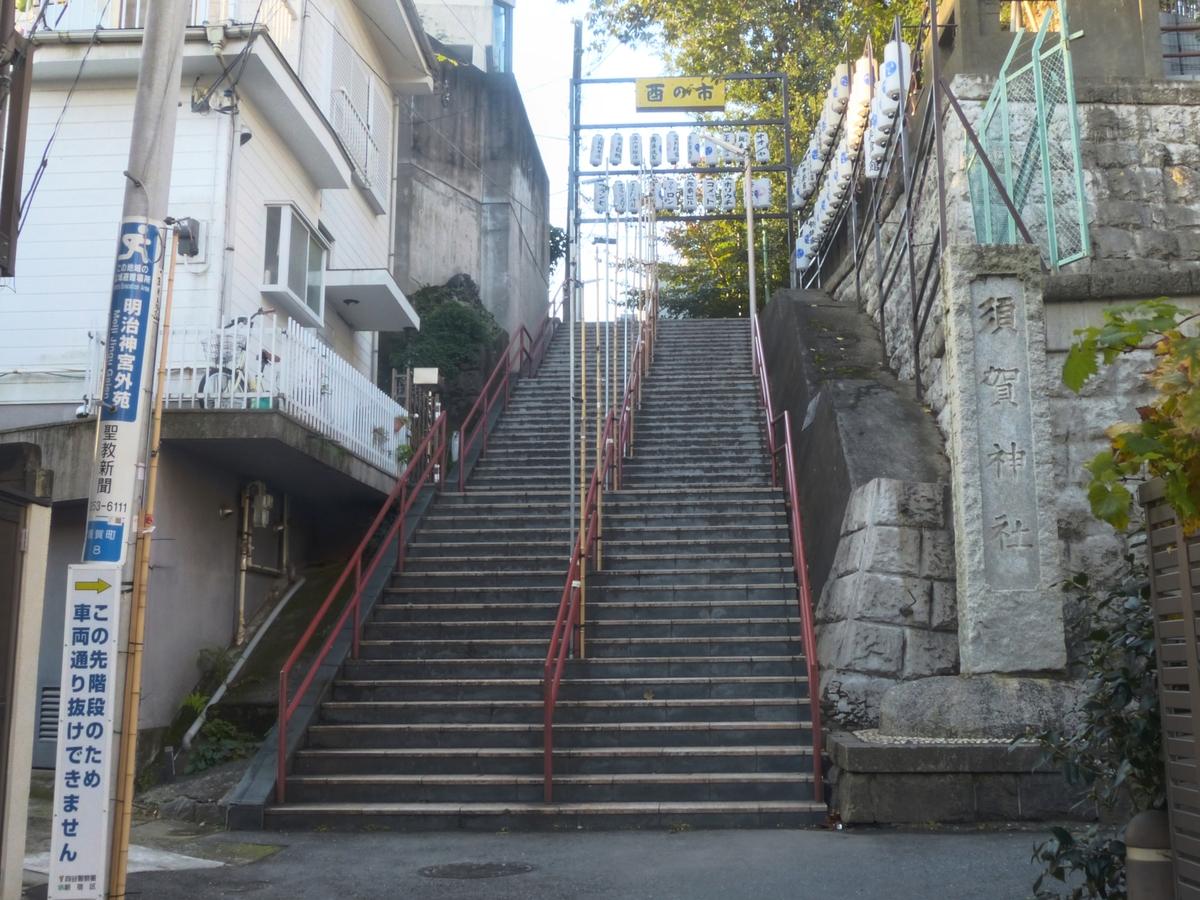
This is the pilgrimage’s centerpiece. The staircase where Taki and Mitsuha finally meet again in the film’s climactic final scene. Shinkai’s team captured the location with near-photographic precision: the red handrails, the surrounding residential buildings, the way light falls across the steps in the late afternoon.

Photo: Unsplash
Standing at the top of these stairs and looking down is one of those moments where the boundary between fiction and reality blurs. You’ve seen this exact view dozens of times in screenshots and fan photos — but the physical experience of being there, feeling the air and hearing the neighborhood sounds that the film couldn’t capture, adds a dimension that no screen can replicate.
| Address | Suga Shrine (須賀神社), 5 Sugacho, Shinjuku-ku, Tokyo 160-0018 |
| Access | JR Yotsuya Station (四ツ谷駅) South Exit → turn right → walk 10 min through residential streets. The stairs are on the east side of the shrine. |
| Hours | The stairs are public and accessible 24 hours. The shrine grounds are open 9:00–17:00. |
| Cost | Free |
Best time for photos: Late afternoon (3:00–5:00 PM) on a clear day. The golden hour light matches the film’s color palette almost exactly. For photos without other visitors in the frame, weekday mornings before 10:00 AM are quietest.
Photo angles: The most recognizable angle is from the top of the stairs looking down and slightly to the right. The view from the bottom looking up also works well and shows the shrine gate at the top.
While you’re there: Visit the shrine itself. It’s small and peaceful — a pocket of old Tokyo surrounded by residential streets. The wooden ema (prayer plaques) hung at the shrine include messages and illustrations from fans around the world, written in dozens of languages. It’s unexpectedly moving.
Location 2: Shinjuku Station South Exit & Pedestrian Overpass
Multiple scenes in the film are set around Shinjuku Station’s southern exit area. The pedestrian overpass connecting the station to surrounding buildings appears in several key moments, and the surrounding buildings — including the NTT DOCOMO Yoyogi Building (the tall clock-tower-like structure) — are visible in the film’s backgrounds.
| Access | Shinjuku Station, South Exit (南口) or New South Exit (新南口) |
| Best angle | From the overpass looking south toward the DOCOMO Tower, especially at twilight. The film uses several scenes set at this blue-orange moment. |
Location 3: Shinanomachi Station Area
The area around Shinanomachi Station on the JR Sobu Line appears in several scenes. The pedestrian bridge crossing over the train tracks and the view of the station platform are both reproduced in the film. This is one of the quieter locations — you may have the spot entirely to yourself, especially on weekdays.
| Access | JR Shinanomachi Station (信濃町駅) on the Sobu Line. The station itself is the starting point — walk the pedestrian bridge for the best views. |
| Best moment | When a train passes through the station while you’re on the pedestrian bridge. The motion and sound add to the cinematic feeling. |
Location 4: National Art Center, Tokyo (Roppongi)
The distinctive undulating glass facade of the National Art Center appears in the film as a background element. The building itself — designed by architect Kisho Kurokawa — is architecturally stunning regardless of its anime connection. The interior cafe (on an elevated cone-shaped platform) offers one of the best views in Roppongi.
| Address | 7-22-2 Roppongi, Minato-ku, Tokyo 106-8558 |
| Access | Nogizaka Station (Tokyo Metro Chiyoda Line) Exit 6 → direct connection. Or Roppongi Station (Hibiya Line) Exit 7 → 5 min walk. |
| Hours | 10:00–18:00 (Friday and Saturday until 20:00). Closed Tuesdays. |
| Entry | Building is free to enter. Individual exhibitions charge separately (typically ¥1,500–2,500). |
Location 5: Yotsuya Station & Surrounding Streets
Yotsuya Station appears directly in several scenes, and the residential streets between the station and Suga Shrine serve as backgrounds throughout the film. These quiet, hilly streets with their mix of old and new architecture give you a sense of the “everyday Tokyo” that Shinkai captures so well — the version of the city that exists between the famous landmarks.
| Access | JR Yotsuya Station (四ツ谷駅) — same station as Location 1. Start here and walk to Suga Shrine. |
Suggested Walking Route: Half-Day “Your Name” Pilgrimage
You can visit all the main Tokyo locations in a single half-day walk. Here’s the most efficient route:
| Time | Location | How |
| 13:00 | Start at JR Yotsuya Station (South Exit) | — |
| 13:00–13:15 | Yotsuya Station surroundings | Walk and photograph |
| 13:15–13:45 | Walk to Suga Shrine stairs | 10 min walk through residential streets. Take your time — the walk is part of the experience. |
| 13:45–14:15 | Suga Shrine stairs + shrine visit | The main event. Spend as long as you want. |
| 14:15–14:30 | Walk back to Yotsuya Station | 10 min return walk |
| 14:30–14:40 | Train to Shinanomachi | JR Sobu Line, 1 stop (2 min) |
| 14:40–15:00 | Shinanomachi pedestrian bridge | Wait for a train to pass for the cinematic moment |
| 15:00–15:20 | Train to Shinjuku | JR Sobu Line, 2 stops (4 min) |
| 15:20–15:50 | Shinjuku South Exit overpass | Walk the overpass and surrounding area. Best at twilight. |
| Optional | Take Oedo Line to Roppongi | National Art Center (~20 min including transfer) |
Total time: 2.5–3 hours at a relaxed pace, not including the optional Roppongi detour. Add 1-1.5 hours for the National Art Center if you include it.
Cost: Effectively free — just train fare between stations (¥150-200 per ride, or covered by any day pass). The shrine, stairs, and all outdoor locations are free to visit.
Beyond Tokyo: Hida & Takayama (The “Itomori” Region)
The fictional town of Itomori in the film is based on the Hida region of Gifu Prefecture, particularly the town of Hida (飛騨市). The Hida Furukawa train station, the local library, and the surrounding mountain scenery all appeared in the film. The area has embraced its anime heritage, with Your Name-themed signage, maps, and even themed goods at local shops.
It’s a full day trip from Tokyo: approximately 4 hours by Shinkansen (Tokyo → Nagoya) + JR Takayama Main Line (Nagoya → Hida-Furukawa). A Japan Rail Pass covers the entire journey. If you’re already planning to visit Takayama or Shirakawa-go (both popular day trips from Tokyo), Hida-Furukawa is a short detour.
Photography & Pilgrimage Etiquette
Save scene screenshots on your phone. Before your trip, save screenshots of the anime scenes you want to match on location. Several fan-maintained websites and X/Twitter accounts catalog exact camera positions for Your Name locations — search “君の名は 聖地巡礼” for detailed comparison photos and GPS coordinates.
Match the time of day. Shinkai is renowned for his depiction of light. The Suga Shrine stairs look completely different at noon versus golden hour — and the film uses late afternoon light. Visit between 3:00–5:00 PM on a clear day for the closest match to the film’s palette.
Save comparison screenshots. Before your trip, save screenshots of the anime scenes on your phone. On-site, hold up the screenshot next to the real view for comparison photos — side-by-side posts (anime vs. reality) consistently perform well on social media.
Respect the neighborhood. This is critical. The Suga Shrine area is a residential neighborhood where people live their daily lives. Keep noise to a minimum, don’t block sidewalks for extended photo sessions, don’t climb walls or fences for angles, and don’t enter private property. The residents have been remarkably patient with the years of fan visitors — return that patience with courtesy.
Want more anime pilgrimage ideas? Read our guide to 10 anime pilgrimage spots in Tokyo. For other pop culture activities, check our Akihabara guide and anime collab cafe guide.
More Anime Pilgrimages
- 10 Anime Pilgrimage Spots in Tokyo — includes Shibuya, Asakusa, Odaiba and more
- Akihabara Complete Guide — the Steins;Gate pilgrimage district
Your Name Walking Tour with a Guide
A local guide takes you to every filming location from Your Name, explains the scene references, and helps you recreate the iconic photos. The walking route covers Suga Shrine, Shinjuku, and Yotsuya in about 2.5 hours.
Related Guides
- Weathering With You Locations Tokyo — Every Real Spot from Tenki no Ko
- Demon Slayer Pilgrimage Tokyo — Every Real Location from Kimetsu no Yaiba
- One Piece Kumamoto Statue Tour — All 10 Straw Hat Statues
More Anime Pilgrimages
- Jujutsu Kaisen Shibuya Pilgrimage Guide — Walk the real Shibuya locations from JJK
- SPY×FAMILY Tokyo Fan Day Guide — Another great pilgrimage through Tokyo
- Shibuya & Harajuku Pop Culture Guide — Explore the area around Suga Shrine
- Ikebukuro Anime Guide 2026 — Continue your anime tour in Ikebukuro
- Japan IC Card & Transit Guide — Navigate between pilgrimage spots easily
- Anime Collab Cafe Calendar — Check for Your Name or Shinkai collabs during your visit
Follow @japan_pop_now on Instagram for daily Tokyo pop culture updates.
Japan Pop Now is a Tokyo-based English-language media covering Japanese pop culture for international visitors.
More Pilgrimage Guides

Written by Takapon
Born and raised in Kyoto, currently in Tokyo. Former management consultant turned anime culture writer. Has visited countless collaboration cafes and pilgrimage spots across Japan. Also sharing tips on Instagram @pop_now_jp.
Follow @pop_now_jp on Instagram