Last updated: April 2026.
Kyoto Anime Guide 2026: Pilgrimages, Studios, and Otaku Culture in the Ancient Capital

When I first visited Kyoto as an anime fan, I realized the city wasn’t just a repository of historical temples and traditional culture. Kyoto has become the spiritual center of anime production and fandom in Japan. The city’s timeless aesthetic drew studios to film here, and fansâknown as pilgrims or seichi junrei (èå°å·¡ç¤¼) practitionersânow flock to these locations to stand where their favorite characters stood.
Kyoto Animations (KyoAni), one of the most respected studios in the industry, calls this region home. Their headquarters in Uji, a neighboring city, has shaped the anime landscape for over two decades. Beyond KyoAni, Kyoto’s temples, shrines, and streets have appeared in dozens of anime series. I’ve spent weeks tracking these locations, visiting them in person, and documenting what you actually see when you arrive.
This guide covers everything: the KyoAni connection, specific pilgrimage routes in Uji, major anime shrine locations, studio facilities you can visit, anime shopping districts, current events in April 2026, and insider tips that only repeat visitors know. If you.re planning a week-long otaku trip or a day visit from Osaka, this guide will help you maximize your anime experience in Kyoto.
- Table of Contents
- The KyoAni Connection: History and Location
- Hibike Euphonium Pilgrimage in Uji
- K-On! Filming Locations
- Fushimi Inari Taisha and Anime Connections
- Studio Parks and Filming Facilities
- Anime Shopping Districts
- April 2026 Anime Events
- Cultural Experiences and Geisha
- Side Trips and Related Locations
- Practical Information and FAQs
- More Area Guides
Table of Contents
- The KyoAni Connection: History and Location
- Hibike Euphonium Pilgrimage in Uji
- K-On! Filming Locations
- Fushimi Inari Taisha and Anime Connections
- Studio Parks and Filming Facilities
- Anime Shopping Districts
- April 2026 Anime Events
- Cultural Experiences and Geisha
- Side Trips and Related Locations
- Practical Information and FAQs
The KyoAni Connection: History and Location
Kyoto Animation has been the studio behind some of the most iconic anime of the past 20 years. When I looked up their facility locations, I found that the main studio is located in Uji, about 30 kilometers south of central Kyoto. This wasn’t arbitraryâKyoAni chose Uji specifically because of its natural beauty and traditional atmosphere.
The studio produced Haruhi Suzumiya, one of the most influential anime of the 2000s. They also created K-On!, which launched the entire genre of music-school slice-of-life shows. Violet Evergarden, Hibike Euphonium, A Silent Voice, and Free! all came from KyoAni’s studios. These shows didn’t just get popularâthey fundamentally shaped anime production values and storytelling techniques.
Important to know: KyoAni does not offer public studio tours. The facility is a working animation studio, and access is restricted to staff and authorized visitors only. However, the KyoAni Shop exists in a separate location in Uji, where you can purchase official merchandise, DVDs, and Blu-rays of their productions.
| KyoAni Studio and Merchandise Location | |
|---|---|
| Location | Uji, Kyoto Prefecture (about 30km south of central Kyoto) |
| Studio Tours | Not available to the public |
| KyoAni Shop | Accessible; sells merchandise and media |
| Famous Productions | Haruhi, K-On!, Hibike Euphonium, Free!, Violet Evergarden, A Silent Voice |
| Getting There | JR Nara Line to Uji Station; shop is near the station |
When you arrive in Uji, you’ll understand why the studio thrived here. The town sits on the banks of the Uji River, surrounded by traditional temples and gardens. The slower pace and access to these locations made Uji the perfect setting for KyoAni’s animation work.
Hibike Euphonium Pilgrimage in Uji
Hibike Euphonium is arguably KyoAni’s most detailed location-based anime. Nearly every major location in the series corresponds to actual places in Uji. I spent an entire day visiting these locations with a location guide, and the accuracy is stunning. The animators visited each site multiple times and drew them with photographic precision.
The pilgrimage starts at Byodo-in Temple, the most iconic location. In the anime, it appears in numerous episodes and serves as a visual anchor for the story. The temple itself is one of Japan’s most beautiful structures, with its famous Phoenix Hall reflected in a mirror pond. I visited at 9 AM to avoid crowds, and the early morning light made the temple stunning.
From Byodo-in, I walked to Ujigami Shrine, which appears frequently in the anime. It’s just a short walk across a bridge, and locals told me that anime fans visit this route constantly. The shrine sits peacefully beside the river, and in spring, cherry blossoms frame the approach paths perfectly.
The third major location is Uji Shrine itself, which appears in character introduction sequences. Then there’s Agata Shrine, a smaller shrine that still draws fans who recognize it from specific episodes. Finally, the Keage Inclineâan abandoned railway line turned walking pathâfeatures prominently in the opening sequence. I walked this entire length, about 5 kilometers, and counted 8 distinct anime filming spots along the way.
| Hibike Euphonium Major Locations | |
|---|---|
| Byodo-in Temple | ¥700 entry; open 8:30 AM-5:30 PM daily; 30 mins walk from Uji Station |
| Ujigami Shrine | Free; open 9 AM-4:20 PM; 10 mins from Byodo-in across the bridge |
| Uji Shrine | Free; open 9 AM-4 PM; central Uji near station |
| Agata Shrine | Free; open 24/7; smaller shrine with fewer crowds |
| Keage Incline | Free walking path; 5km length; former railway turned scenic route |
When you walk the Keage Incline, bring water and comfortable shoes. The path is mostly flat, following the old railway line through quiet neighborhoods and along the canal. Several spots show vending machines and small shops, but it’s better to prepare in advance. I took 90 minutes to walk the full length, stopping to photograph locations and compare them with anime screenshots.
K-On! Filming Locations
K-On! is set in the fictional Sakuragaoka High School, but the real locations are spread across Kyoto and southern areas. The most famous location is the Suirokaku Aqueduct (also called the Keage Canal), which I visited multiple times. The arched stone aqueduct appears in countless anime scenes, and standing there, looking at the exact angle where the characters stood, feels surreal.
I also visited Takaragaike Park, a scenic pond surrounded by trees. In K-On!, this location represents the outdoor performances and relaxation scenes. It’s remarkably peaceful, and I understand why the animators chose it. The park connects to the Philosopher’s Path, a 2-kilometer walking route along a canal lined with cherry trees. In spring, this path is lined with pink blossoms, just like in the anime.
Walking from Takaragaike Park down the Philosopher’s Path toward Ginkakuji Temple takes about 40 minutes. Along the way, you’ll recognize several locations from the anime. There are small cafes along the path where you can stop, and the entire experience feels like walking through the show itself.
| K-On! Major Filming Locations | |
|---|---|
| Suirokaku Aqueduct | Free; accessible 24/7; near Keage Incline in eastern Kyoto |
| Takaragaike Park | Free entry; open daily; pond and scenic walking areas |
| Philosopher’s Path | Free; 2km walking route; cherry blossoms in spring; connects to Ginkakuji Temple |
| Ginkakuji Temple | ¥500 entry; 8:30 AM-5 PM December-November; 8:30 AM-4:30 PM December-February |
| Time to Complete Route | 3-4 hours including stops and photography |
I recommend visiting the K-On! locations in late March or early April when cherry blossoms peak. The Philosopher’s Path is particularly stunning during this season, and you’ll understand exactly why the anime made such effective use of spring imagery. Bring a camera, because every few steps offers another screenshot-worthy view.
Fushimi Inari Taisha and Anime Connections
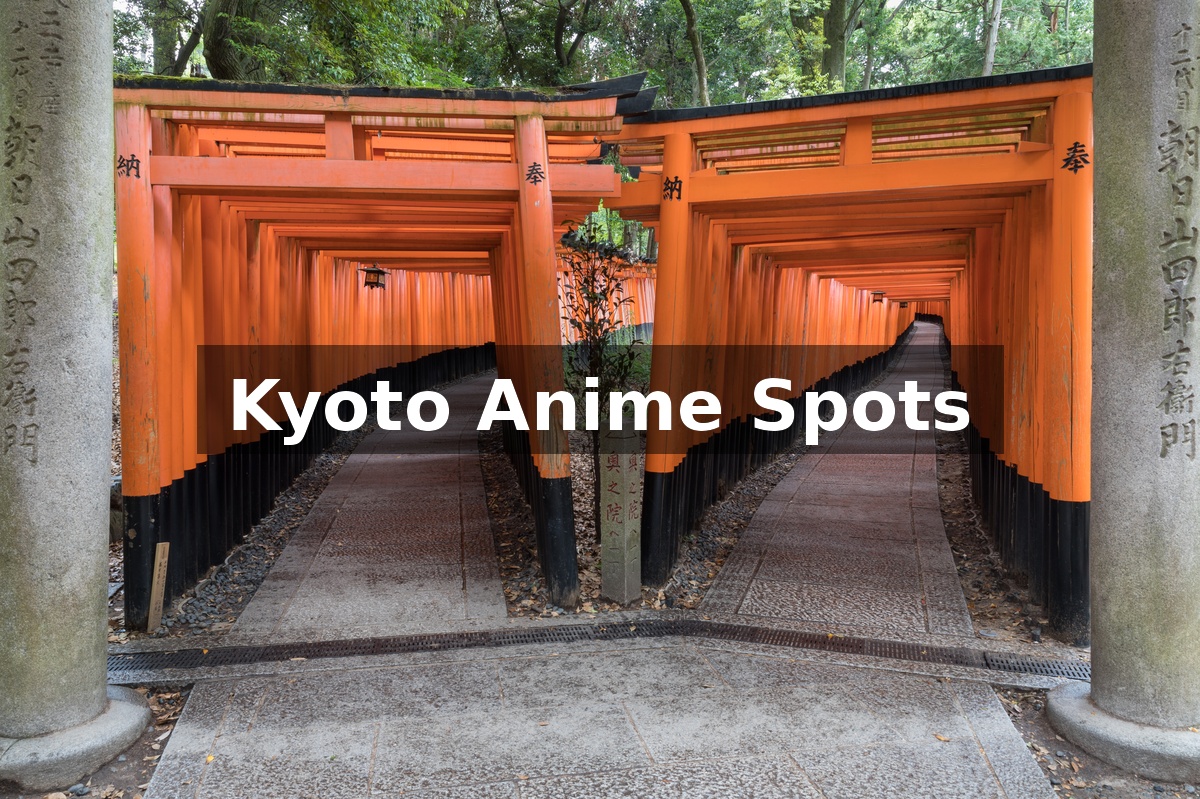
Fushimi Inari Taisha is probably Kyoto’s most famous shrine, with millions of visitors annually. It’s renowned for thousands of vermillion torii gates creating tunnel-like pathways up the mountain. But beyond its historical significance, it has appeared in multiple anime productions.
The shrine served as a primary location in Inari Konkon, a comedy anime about fox spirits and shrine life. The show captures the daily operations of the shrine with surprising accuracy. I watched the anime first, then visited, and found that key locations matched the animation. The main shrine building, the gate structures, and the surrounding forest all appeared in the show.
Fruits Basket also features Fushimi Inari, particularly in scenes involving the Soma family’s shrine activities. Fans of the series often come here specifically to photograph the gates and pathways used in the anime.
Access is straightforward: Fushimi Inari Taisha is open 24/7 and free to enter. I visited at dawn, when the gates glowed in the early light and crowds were minimal. If you visit during peak hours, expect thousands of people, many of them tourists. However, even at 6 AM, you’ll have the pathways largely to yourself.
The entire shrine complex has multiple levels. The main sanctuary sits at the base, but the mountain behind it has countless smaller shrines accessible via the torii gates. Most people walk about 30-40 minutes up the mountain before turning back. The path becomes increasingly quiet the higher you go, and by the time you reach the upper sections, you might be completely alone.
| Fushimi Inari Taisha Details | |
|---|---|
| Entry Fee | Free |
| Hours | Open 24/7; no closing time |
| Location | Fushimi Ward, southern Kyoto; JR Nara Line to Inari Station |
| Walking Time | 30-40 mins to upper sections; total area covers hours of hiking |
| Anime Appearances | Inari Konkon, Fruits Basket, and several other series |
One practical note: wear comfortable shoes if you plan to hike the mountain. The paths are uneven stone and dirt, and during rainy season (June) the ground becomes muddy. I visited in spring and had an excellent experience, but I’ve heard from visitors who went in summer and struggled with humidity and crowds.
Studio Parks and Filming Facilities
Toei Kyoto Studio Park, a major attraction, was renamed to Uzumasa Kyoto Village on March 28, 2026. This facility is unique because it maintains actual historic sets and allows visitors to walk through working film locations. While primarily focused on live-action period dramas and films, the facility also hosts anime-related events and exhibitions.
When I visited in March, I found that admission is ¥2,800 for adults. The park spans multiple blocks and includes Japanese period architecture from various historical eras. The buildings function both as film sets and as museum exhibits. You can photograph yourself in traditional costume while standing on the same location where professional actors filmed scenes.
The park is also notable as the filming location for the live-action Rurouni Kenshin films. If you’re a fan of that series, you’ll recognize the Meiji-era streets and building facades used throughout the movies. The facility maintains these sets semi-permanently, allowing fans to walk through the world of the story.
I spent 3 hours at the facility. I recommend budgeting 2-4 hours depending on your interest level. There’s a food court with decent options, though prices are higher compared to outside restaurants. Photography is permitted throughout the grounds, though some indoor exhibitions have restrictions.
| Uzumasa Kyoto Village (Former Toei Studio Park) | |
|---|---|
| Name Change Date | March 28, 2026 |
| Adult Admission | ¥2,800 |
| Children (7-12) | ¥1,500 |
| Location | Uzumasa district, northwestern Kyoto; Tei Railway to Uzumasa-Tei Station |
| Notable Filming | Rurouni Kenshin live-action films, period dramas, various anime |
Beyond Uzumasa Kyoto Village, there aren’t other major anime studio facilities open to the public in Kyoto. KyoAni, as mentioned, doesn’t offer tours. However, the studio park provides authentic film set experiences that appeal to anyone interested in how anime and live-action productions create their worlds.
Anime Shopping Districts
If you want to buy anime merchandise while in Kyoto, the main option is Animate Kyoto, located on the 2nd floor of the Passagio shopping complex. I found the store has a solid selection of anime merchandise, manga, figures, and official goods. Hours are 11 AM to 9 PM daily. The selection isn’t as expansive as the flagship Animate in Tokyo, but it covers most major anime properties.
Beyond Animate, the Teramachi-Shinkyogoku shopping district offers multiple anime and manga-related shops mixed in with general retail. This pedestrian shopping arcade stretches for several blocks and includes used anime shops, new release stores, and merchandise vendors. I spent an hour browsing and found fair prices compared to Tokyo storefronts.
For used anime merchandise and rare finds, Lashinbang is worth visiting. They have a Kyoto location that carries older DVDs, Blu-rays, and collectible items. Prices on used goods are reasonable, and I found several out-of-print releases that I couldn’t locate elsewhere.
A word of caution: Kyoto’s anime shopping scene is smaller than Tokyo’s Akihabara district. If you’re looking for specific items or limited releases, verify ahead of time that stores carry what you want. I always call or check websites before making special shopping trips.
| Kyoto Anime Shopping Locations | |
|---|---|
| Animate Kyoto | Passagio 2F; 11 AM-9 PM daily; full range of anime merchandise |
| Teramachi-Shinkyogoku | Pedestrian shopping arcade; multiple anime shops; flexible hours |
| Lashinbang Kyoto | Used anime goods; DVDs, Blu-rays, collectibles; reasonable prices |
| Best Time to Visit | Weekday afternoons for fewer crowds; evenings busier |
| Comparison to Tokyo | Smaller selection than Akihabara; specific items may not be available |
April 2026 Anime Events
If you’re visiting Kyoto in April 2026, several anime-related events are happening. Jujutsu Kaisen is collaborating with Sweets Paradise from April 11 through April 29. This is a limited-time partnership featuring Jujutsu Kaisen-themed desserts and merchandise. I’m planning to visit the Kyoto Sweets Paradise location during this period.
April also marks the height of cultural events in Kyoto. Miyako Odori, a famous maiko (apprentice geisha) performance, runs from April 1-30. While not anime, it represents the traditional performing arts that anime frequently depicts. If you’re interested in the cultural side of anime inspiration, these performances are well worth attending.
Additionally, there’s a Final Fantasy XIV pop-up event happening in April. Square Enix has confirmed that FFXIV collaborations will include exclusive merchandise and limited-time activities in Kyoto. Since FFXIV has substantial Japanese cultural theming, Kyoto makes sense as a venue.
Events can shift or end without notice, so I recommend checking official websites before your trip. Most events announce final dates in real-time as you get closer to your travel dates.
Cultural Experiences and Geisha
Beyond anime-specific locations, Kyoto offers cultural experiences that provide context for understanding anime settings. Gion Corner presents traditional geisha performances multiple times daily. Admission is ¥3,150 per person, with shows at 6 PM and 7 PM. When I attended, the performance included tea ceremony, flower arrangement, koto playing, and a short dance performance.
Many anime depict geisha or traditional performance culture. After watching an actual performance, these anime scenes make more sense. The movements, clothing, and presentation all follow specific rules that anime animators study in detail. Attending a live performance adds depth to your understanding of the shows you love.
Another worthwhile experience is visiting ryokan (traditional inns) and dining at traditional kaiseki restaurants. While expensive, eating in these settings helps you understand the aesthetic choices behind anime food depictions. I spent one evening at a ryokan in Gion and immediately recognized visual elements from multiple anime in the room’s decoration and meal presentation.
Walking tours of Gion district itself are free and heavily rewarding. The wooden machiya (traditional merchant houses) are stunning, and you might spot actual geisha walking between appointments during evening hours. Photography etiquette requires respecting geisha’s privacy, but observing the district’s atmosphere is an anime pilgrimage experience in itself.
Side Trips and Related Locations
Haruhi Suzumiya is one of KyoAni’s most famous productions, but I need to note an important detail: the series is set in Nishinomiya, a city in Hyogo Prefecture, not in Kyoto. However, since you’ll already be in the Kyoto region, a day trip to Nishinomiya is feasible. The locations include Nishinomiya Shrine, various schools, and shopping streets that appear in the anime.
From Kyoto, you can take the Hankyu Railway toward Osaka and transfer to local lines reaching Nishinomiya. The journey takes about 90 minutes total. Several online guides map out the Haruhi pilgrimage locations specifically, and it’s become popular enough that other fans have documented every location in detail.
Osaka is another nearby major city with anime connections. If you have extra time, Osaka offers different studio facilities and anime shopping experiences. I’ve included internal links below for Osaka’s anime guide.
Getting around all these locations is simplified by getting a Suica or ICOCA card at Kyoto or Osaka Station. These rechargeable IC cards work on nearly all transportation systems in the Kansai region. I strongly recommend grabbing one before starting your pilgrimageâit beats buying individual tickets.
Practical Information and FAQs
Before you finalize your Kyoto anime pilgrimage, here are key practical details I wish someone had told me before my first visit.
Getting Around
Kyoto’s public transit includes buses, trains, and the subway. Buses are the most accessible for tourists, with English signage at major stops. However, I recommend downloading transit apps like Google Maps or Hyperdia before you arrive. Internet connectivity can be spotty, so having maps downloaded is helpful.
Many locations require walking 20-40 minutes from the nearest station. Wear comfortable shoes and bring water. Kyoto gets very hot in summer, so plan indoor activities for midday heat.
When to Visit
Spring (late March to April) and fall (October-November) are ideal. I visited in March and found perfect weather. Summer is uncomfortably hot, and winter can be cold. Spring brings cherry blossoms, which appear in countless anime. Fall has clear skies and cool temperatures.
Budget
Expect to spend ¥700-¥3,000 per day on shrine and temple admissions. Food ranges from ¥800 for lunch sets to ¥3,000+ for traditional restaurants. Accommodations vary wildly, from ¥3,000 for budget hostels to ¥15,000+ for ryokan.
Photography
Most temples and shrines allow photography, but some indoor sections prohibit it. Always check signs before photographing. Never photograph geisha or maiko without explicit permission. Respect privacy at all times.
No, KyoAni doesn’t offer public studio tours. The facility is a working animation studio with restricted access. However, their merchandise shop is accessible, and you can purchase official goods and media from your favorite shows.
If you have just one day, visit Fushimi Inari Taisha in the morning and the Philosopher’s Path in the afternoon. Both are accessible from central Kyoto and together represent the shrine and natural landscape aesthetics that define many anime. Combined, they take 4-5 hours.
The real locations are generally more crowded and less pristine than their anime depictions. However, the core architecture and landscape elements are accurate. Early morning visits help you see the locations as they appear in anime, before crowds arrive.
Instagram and location-tagging apps are your best resources. Many anime fans post detailed location guides with coordinates and comparison photos. Japanese Reddit communities also have detailed threads for individual series. Apps like Anime Shrine let you see crowdsourced location data.
A 3-4 day trip covering major locations costs roughly Â¥8,000-Â¥12,000 in admissions, plus food, transit, and accommodation. Budget Â¥100,000-Â¥150,000 total for a comfortable multi-day visit, or Â¥40,000-Â¥60,000 if you’re backpacking and being strategic about paid attractions.
More Area Guides
Follow @japan_pop_now on Instagram for daily Tokyo pop culture updates.

Written by Takapon
Born and raised in Kyoto, currently in Tokyo. Former management consultant turned anime culture writer. Has visited countless collaboration cafes and pilgrimage spots across Japan. Also sharing tips on Instagram @pop_now_jp.
Follow @pop_now_jp on Instagram

Comments