Last updated: March 2026. Covers Shibuya PARCO’s 6F Cyberspace, Harajuku’s Takeshita Street, Cat Street, Kawaii Monster Land, Kiddy Land, and a walking route combining both areas.

Shibuya and Harajuku don’t show up on most anime fan itineraries. Akihabara gets that slot, and understandably — it’s the obvious choice. But if you skip Shibuya and Harajuku, you’re missing two things: the Nintendo flagship store, the Pokémon Center, the Jump Shop, and the Capcom Store all sitting on one floor of the same building — and an entire neighborhood dedicated to the kawaii culture that fuels half the anime aesthetic you already love.
Shibuya is where the gaming and shonen side of Japanese pop culture has consolidated. Harajuku is where the visual side — fashion, design, character goods, street art — lives and breathes. Together, they’re a 15-minute walk apart, and you can cover both in a single day.
This guide skips the standard tourist attractions (you already know about Scramble Crossing and Hachiko) and focuses specifically on what matters to anime, manga, and pop culture fans.
- Shibuya PARCO 6F — Cyberspace SHIBUYA
- MEGA Don Quijote Shibuya — 24-Hour Anime Shopping
- Tower Records Shibuya — Anime Music and Pop-Ups
- MAGNET by SHIBUYA109 — Anime Collabs and Gacha Heaven
- Harajuku: Takeshita Street and Beyond
- Cat Street (Ura-Harajuku) — Vintage and Streetwear
- Design Festa Gallery — Where Fan Art Meets Fine Art
- Meiji Jingu — The Contrast That Makes Harajuku Make Sense
- The Walking Route: Shibuya + Harajuku in One Day
- Frequently Asked Questions
- More Area Guides
Shibuya PARCO 6F — Cyberspace SHIBUYA
If you visit one building in Shibuya for pop culture, make it PARCO. The 6th floor — branded as “Cyberspace SHIBUYA” — is essentially a mall floor dedicated entirely to gaming and anime retail.
All of these stores are on the same floor, sharing the same escalator landing:
| Nintendo TOKYO | Japan’s first official Nintendo store. Mario, Zelda, Splatoon, Animal Crossing, Kirby — exclusive merchandise you won’t find outside Japan. The store-exclusive items rotate regularly. |
| Pokémon Center Shibuya | Features a massive Mewtwo figure at the entrance. Full lineup of Pokémon merchandise, plush toys, stationery, and Shibuya-exclusive Pikachu goods. |
| Jump Shop | Shonen Jump franchises in one store: One Piece, Dragon Ball, Jujutsu Kaisen, Demon Slayer, My Hero Academia. Life-size Luffy and Goku statues greet you at the entrance. |
| Capcom Store Tokyo | Monster Hunter, Street Fighter, Devil May Cry, Okami. Character displays and exclusive apparel lines. |
| Godzilla Store | Figures, apparel, and collectibles spanning Godzilla’s entire film history. If you’re even slightly into kaiju, this is a must-see. |
You could easily spend 90 minutes on this single floor. The Nintendo store alone takes 30 minutes if you’re browsing properly. The stores are well-designed and not cramped — it doesn’t feel like fighting through a crowd the way Akihabara shops sometimes do.
| Address | Shibuya PARCO, 15-1 Udagawacho, Shibuya-ku, Tokyo (6th Floor) |
| Station | Shibuya Station — 7 min walk (Hachiko Exit, uphill toward Center Street) |
| Hours | 10:00–21:40 daily |
| Price | Free entry. Budget ¥3,000–10,000 if you plan to buy anything. |
Go early or go late. The 6th floor gets crowded between 13:00–16:00, especially on weekends. Opening time (10:00) or the last hour before closing (20:00–21:00) gives you room to actually look at things without shoulder-bumping through every aisle.

MEGA Don Quijote Shibuya — 24-Hour Anime Shopping
Don Quijote (“Donki”) is Japan’s chaotic discount megastore chain. The Shibuya branch — MEGA Don Quijote — is the flagship, and it’s open 24 hours on the shopping floors.
For pop culture fans, head straight to the 5th floor. This is the cosplay and anime goods section. Costumes, wigs, accessories, character goods from current and recent series, and limited-edition collaborations (recent ones included Demon Slayer and Pokémon). The selection isn’t as hand-picked as a dedicated anime shop, but the prices are competitive and the variety is broad.
The lower floors carry Japanese snacks, beauty products, and electronics — the standard tourist shopping list. But the 5th floor is the reason to come here specifically as an anime fan.
| Address | 28-6 Udagawacho, Shibuya-ku, Tokyo |
| Station | Shibuya Station — 5 min walk |
| Hours | Shopping floors: 24 hours. Some specialty floors close earlier. |
Tower Records Shibuya — Anime Music and Pop-Ups
Tower Records’ nine-story Shibuya flagship is Japan’s largest music store, and the 4th floor is where anime and game music lives. Character song albums, anime OSTs, voice actor releases, and game soundtracks — the selection is thorough.
What makes Tower Records worth a dedicated visit is the rotating pop-up shop program. They regularly host anime collaboration mini-stores on various floors, with exclusive merchandise tied to current anime seasons, film releases, or franchise anniversaries. Check their X (Twitter) account @TOWER_Shibuya before you go to see what’s running.
The store also has private photo booths with mirrors on the upper floors — designed for fans who buy character merchandise and want to photograph it immediately.
MAGNET by SHIBUYA109 — Anime Collabs and Gacha Heaven
SHIBUYA109 is the iconic fashion building at Scramble Crossing. But for pop culture fans, the more interesting destination is MAGNET by SHIBUYA109 — the sister building directly across the intersection. The 5th floor is where things get good:
| AMNIBUS STORE | Limited-time anime merchandise collaborations. The lineup changes frequently — check what’s running before you visit. |
| Dream Capsule | Shibuya’s largest gacha-gacha specialty store. Hundreds of capsule machines, all anime and character themed. Budget ¥300–500 per pull. |
| JOL Collab Store | Rotating anime, game, and idol merchandise collaborations. |
| Patokoro Satellite | Trading cards: Yu-Gi-Oh!, Pokémon, Duel Masters. Singles and packs. |
Harajuku: Takeshita Street and Beyond

Cross into Harajuku and the energy shifts completely. Shibuya is about buying specific things — games, manga, figures. Harajuku is about experiencing a culture. The kawaii aesthetic, the street fashion, the character goods — this is where it all comes from.
Takeshita Street (Takeshita-dori)
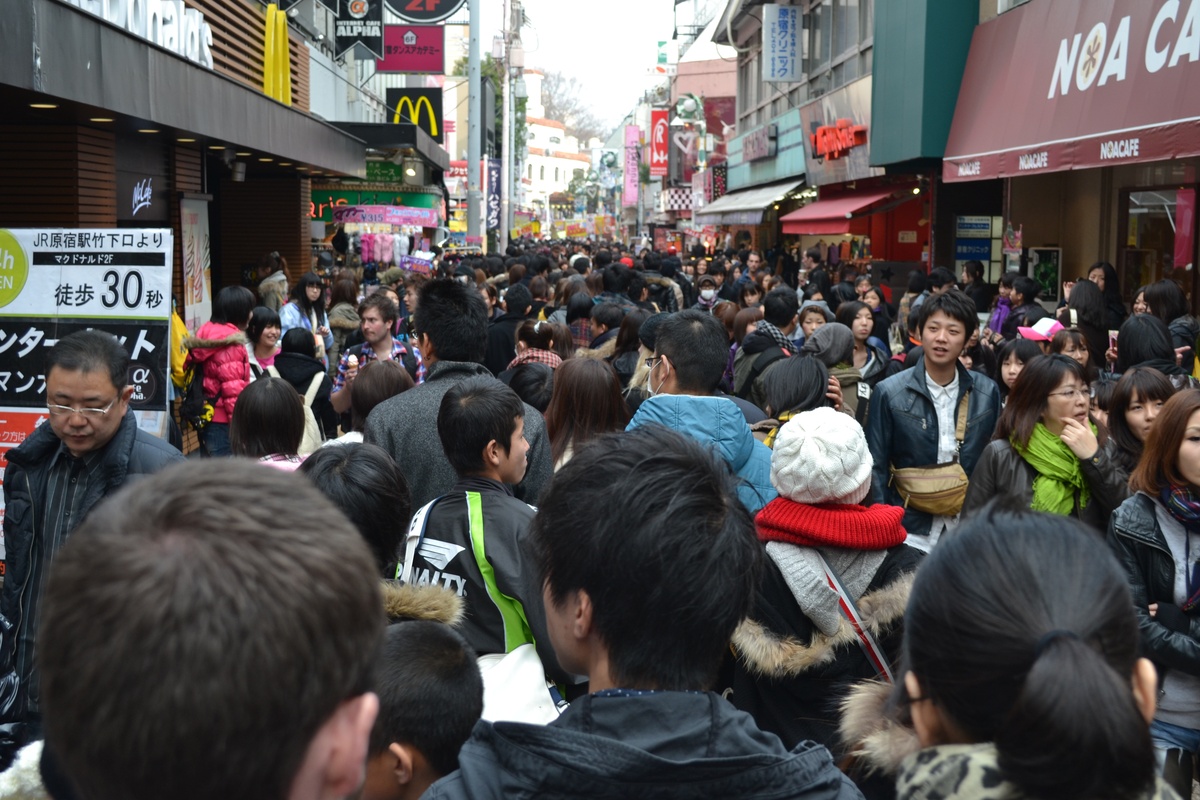
A 350-meter pedestrian street packed with roughly 130 shops. Crepe stands, kawaii fashion boutiques, character goods stores, and capsule toy machines spilling out onto the sidewalk. It’s chaotic, it’s colorful, and it’s been the epicenter of Japanese youth culture for decades.
For anime and pop culture fans specifically, look for:
Sanrio Kawaii Factory Store & Cafe — Opened December 2025. Harajuku-exclusive merchandise and a themed cafe serving character-themed drinks and food. If you’re into Hello Kitty, My Melody, Cinnamoroll, or any Sanrio character, this is the destination.
WEGO — A fashion chain with a customization corner carrying over 100,000 patches, pins, and accessories for DIY pouches and keychains. This is where you build your own ita-bag (the clear-windowed bags covered in character pins that you see everywhere in Japan).
Multiple shops along both sides of the street sell character goods, anime T-shirts, cosplay accessories, and every variety of capsule toy you can imagine.
Takeshita Street is shoulder-to-shoulder on weekends. Especially between 12:00–16:00 on Saturdays. If crowds stress you out, go on a weekday morning. By 10:30 most shops are open and the street is navigable.
Kawaii Monster Land — Opening 2026
The original Kawaii Monster Cafe (2015–2021) was one of Harajuku’s most photographed destinations before it closed. In February 2026, artist Sebastian Masuda opened Kawaii Monster Land in its place — an underground “kawaii amusement park” on the basement level of Takeshita Street Square.
The new venue features candy-colored monster rides, photogenic themed food, games, and live performances. It’s built to be more immersive than the original cafe — less restaurant, more experience. Tickets are available in advance online.
| Location | Takeshita Street Square B1F, Harajuku |
| Hours | 10:00–21:00 |
| Tickets | Adults ¥2,800–3,500 / Children ¥1,400–1,750 / Under 3 free. Book online in advance during busy periods |
Kiddy Land Harajuku
Don’t let the name fool you — Kiddy Land has been operating since 1950 and is one of Tokyo’s best character goods stores for any age. Four floors of character merchandise organized by franchise:
| B1 | Snoopy Town Shop (Peanuts merchandise) |
| 1F | Trending items and seasonal goods |
| 2F | Disney Avenue — Disney goods and exclusive Tokyo merchandise |
| 3F | Pokémon, Mario, Marvel, Star Wars |
| 4F | Rilakkuma Store, Hello Kitty Shop, Sanrio characters, Studio Ghibli goods |
The 4th floor is the highlight for anime fans — Studio Ghibli goods, Sanrio, and Rilakkuma all in one space. The Ghibli selection isn’t as large as the Ghibli Museum shop, but it’s much easier to access (no advance reservation needed).
| Address | 6-1-9 Jingumae, Shibuya-ku, Tokyo |
| Station | Meiji-jingumae Station (Exit 4) — 3 min walk. Or Harajuku Station (Takeshita Exit) — 7 min walk. |
| Hours | 11:00–20:00 daily |
Cat Street (Ura-Harajuku) — Vintage and Streetwear
Cat Street runs about one kilometer between Shibuya and Harajuku, following the path of a former river. It’s the quieter, more hand-picked alternative to Takeshita Street — independent boutiques, vintage shops, and streetwear flagships replacing the chaotic kawaii energy with something more refined.
For pop culture fans, Cat Street offers a different angle. The vintage shops carry secondhand anime-adjacent fashion — band tees from anime franchise concerts, vintage Harajuku streetwear brands like A Bathing Ape (which started in this exact neighborhood in the 1990s), and the kind of retro finds that connect anime aesthetics to real-world Japanese street culture.
RAGTAG is the anchor vintage shop — over 5,000 items from trendy to luxury brands. For pure anime merchandise, you’re better off in Akihabara. But for the fashion influence side of Japanese pop culture — the clothes and aesthetics that anime draws from — Cat Street is the source.
Design Festa Gallery — Where Fan Art Meets Fine Art
Tucked behind the main Harajuku streets, Design Festa Gallery is a two-building art space with 75+ exhibition rooms where anyone can display their work, censorship-free. Exhibitions change daily, and admission is free.
Why it matters for anime fans: a significant portion of the artists displaying here work in anime-adjacent styles. Fan art, original characters in manga-influenced styles, cosplay photography, mixed-media pieces combining traditional Japanese art with pop culture — it’s a window into the creative ecosystem that exists underneath the commercial anime industry.
| Address | 3-20-18 Jingumae, Shibuya-ku, Tokyo |
| Station | Meiji-jingumae Station (Exit 5) — 5 min walk. Harajuku Station (Takeshita Exit) — 9 min walk. |
| Hours | 11:00–20:00 daily |
| Admission | Free |
Meiji Jingu — The Contrast That Makes Harajuku Make Sense
This is not a pop culture destination. Meiji Jingu is a Shinto shrine surrounded by a forest of 120,000 trees, dedicated to Emperor Meiji and Empress Shoken. It’s quiet, it’s sacred, and it feels like you’ve left Tokyo entirely.
So why include it? Because the juxtaposition is Harajuku. The fact that this ancient forest shrine sits right next to Takeshita Street — that Japan’s most traditional and most contemporary cultures exist within a 5-minute walk of each other — tells you something fundamental about why Japan looks and feels the way it does. Every anime that blends Shinto mythology with modern urban life is drawing from exactly this tension.
The shrine is free to enter, takes about 30 minutes to walk through, and provides a genuine moment of calm between shopping sessions. Walk from Harajuku Station through the torii gate, follow the gravel path through the forest, pay your respects at the main hall, and walk back. It resets your brain.

The Walking Route: Shibuya + Harajuku in One Day
Shibuya and Harajuku are about 15 minutes apart on foot, or one stop on the JR Yamanote Line. Here’s the most efficient route for a full day:
| 10:00 | Shibuya PARCO 6F — Hit Nintendo TOKYO, Pokémon Center, Jump Shop before the afternoon crowds. (90 min) |
| 11:30 | Tower Records 4F — Check anime music section and any running pop-ups. (30 min) |
| 12:00 | Lunch — Shibuya has endless options. Try the basement food floors at Shibuya Hikarie or PARCO. |
| 13:00 | Walk to Harajuku via Cat Street — 15 min scenic route through boutiques and cafes. |
| 13:15 | Kiddy Land — Browse all four floors. (30 min) |
| 13:45 | Takeshita Street — Walk the full length, stopping at character shops and the Sanrio store. (45 min) |
| 14:30 | Kawaii Monster Land — The new underground experience. (60 min) |
| 15:30 | Meiji Jingu — Walk through the shrine grounds. Decompress. (30 min) |
| 16:00 | Design Festa Gallery — Browse whatever’s on display. Free. (20 min) |
| 16:30 | Optional: MAGNET by SHIBUYA109 — Gacha machines and anime collabs. (30 min) |
| 17:00 | MEGA Don Quijote — 5F cosplay and anime goods. Open 24 hours so this can shift to evening. (30 min) |
The walk from Shibuya to Harajuku via Cat Street is the best option. It takes 15 minutes and passes through one of Tokyo’s most interesting streetwear neighborhoods. Taking the train saves you only 10 minutes and you miss the best part of the route.
Frequently Asked Questions
Is Shibuya PARCO 6F worth it if I’m going to Akihabara?
Yes. The Nintendo, Pokémon, and Capcom stores here are official flagship locations — the merchandise selection is different from what you’ll find in Akihabara. Akihabara is better for third-party and secondhand goods. PARCO is better for official, exclusive items.
Is Harajuku just for teenagers?
No. Takeshita Street skews young, but Kiddy Land, Cat Street, Design Festa Gallery, and the cafes attract people of all ages. The kawaii aesthetic is universal — you’ll see businessmen browsing Sanrio goods and grandparents buying Ghibli plush toys.
Can I visit Shibuya and Harajuku on the same day as Akihabara?
Physically possible, but you’ll be rushing everything. Shibuya + Harajuku fill a full day on their own. If you definitely must combine them, do Akihabara in the morning and Shibuya PARCO in the late afternoon — skip Harajuku and save it for another day.
How does Shibuya compare to Akihabara and Ikebukuro for anime shopping?
Akihabara has the widest selection and the “anime district” atmosphere. Ikebukuro is strongest for female-oriented fandoms (BL, otome, Animate headquarters). Shibuya fills a different niche: official gaming flagship stores, mainstream pop culture brands, and a more polished, less otaku-specific shopping experience. They complement each other rather than competing.
More Area Guides

Written by Takapon
Born and raised in Kyoto, currently in Tokyo. Former management consultant turned anime culture writer. Has visited countless collaboration cafes and pilgrimage spots across Japan. Also sharing tips on Instagram @pop_now_jp.
Follow @pop_now_jp on Instagram